

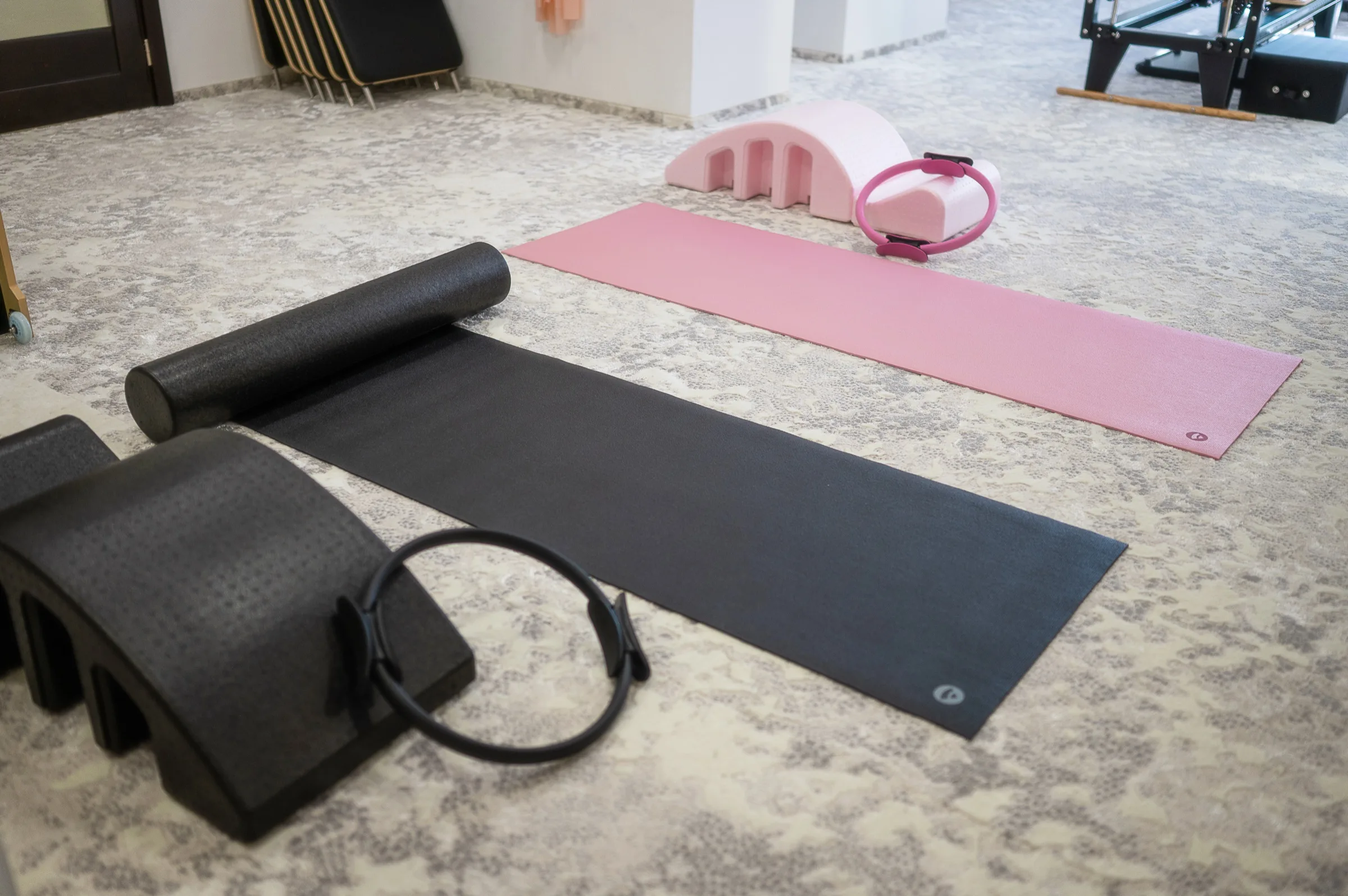
You can do pilates on a mat or on dedicated equipment, and both follow the same principles: controlled movement, breath, deep muscle work, and precise technique. What differs is what creates the load and what supports your body during an exercise. On the mat, that’s your own body weight and the floor. On the reformer, it’s springs and a moving carriage.
Altera’s founder, Tetyana Livshyts, trained in the Polestar Pilates Comprehensive programme, where she learned to build classes on both the reformer and the mat. So we know both formats first-hand, not from someone else’s description. Below we look at where the load comes from in each, what the moving carriage changes, and where to start if you have no experience yet. One thing up front: there’s no universal answer to “which is better”. It depends on what you come in with.
How mat pilates works
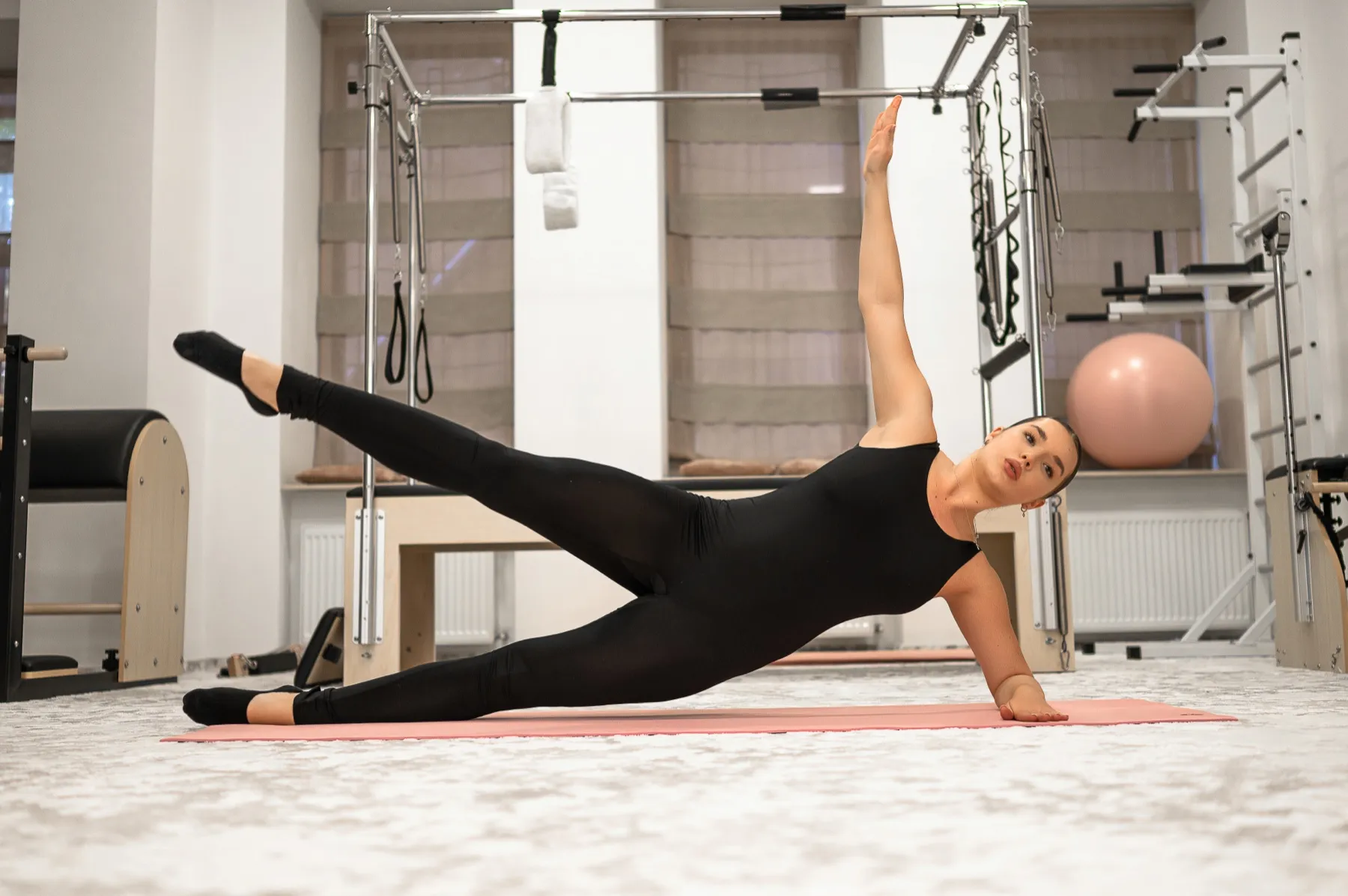
On the mat, you work with your own body weight and the floor as your support. The load depends on your position and how precisely you hold it. Some exercises add small equipment such as balls, rings, or blocks.
The mat is where the basic principles of pilates show most clearly: a neutral spine, body alignment, and calm breathing. The floor won’t tell you when you’ve drifted. Your lower back slowly lifts off the mat, your shoulders creep towards your ears, and it still feels as if everything is right. That’s why mat work often looks simpler than it is, and an exercise seems easy until you try doing it slowly and precisely.
Mat work needs almost nothing, so you can practise anywhere. Your body weight can’t be reduced, though, and where strength or mobility is missing, the body often finds a way to do the movement with other muscles. That’s hard for a beginner to notice on their own.
How the reformer works
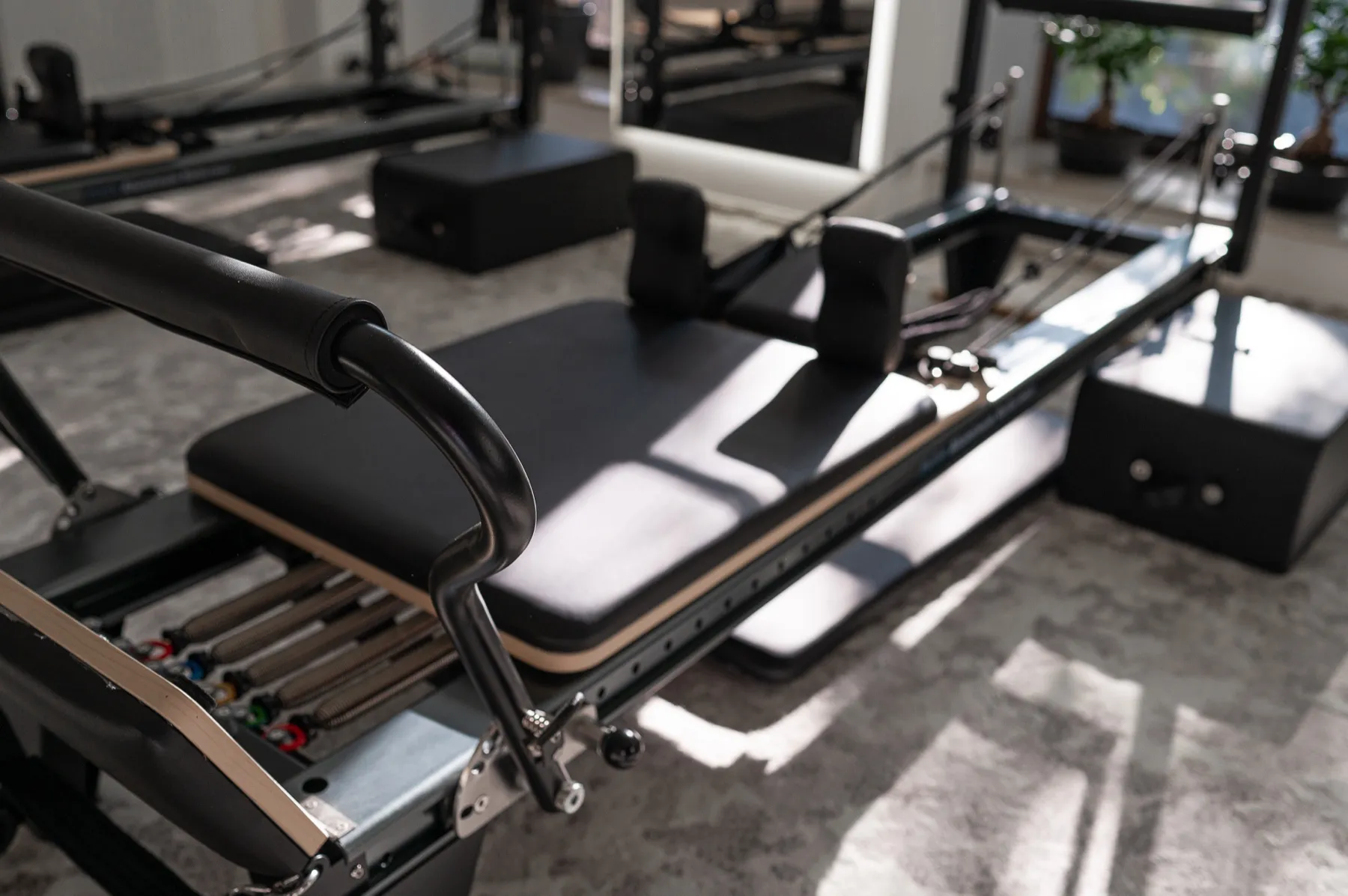
A reformer is a frame with a moving carriage that slides along rails. Springs provide the resistance. The instructor sets them for each person and each exercise, with more resistance or less depending on the goal and how your body feels that day.
The carriage can take part of your body weight. That means an exercise you can’t yet manage on the mat can start as an easier version on the reformer. With different springs, the same exercise becomes demanding for someone with experience, so beginners and experienced clients can work on the same equipment.
You have to control the carriage in both directions, as you push away and as you return to the starting position. If the movement drifts off its path, the carriage moves unevenly straight away, and both you and the instructor can see it.
At Altera, classes also use the barrel, the trapeze, and the chair alongside the reformer. The barrel works on spinal flexibility and mobility, the trapeze adds resistance in different planes, and the chair trains balance and stability, including through asymmetric exercises.
Where to start if you’ve never done pilates
You don’t need experience for either. The studio’s main format is group reformer classes of up to six people, so the instructor can see everyone and correct technique in time.
If you haven’t tried the reformer yet, start with a trial class: it’s private and lasts 60 minutes, and the instructor explains how the equipment works and sets the load for you. You can read about the approach behind our classes on the Polestar Pilates method page, and class and membership prices are on the pricing page.
